


The Mbenenge Misconduct Decision
Ethical Leadership and Accountability: The Mbenenge Misconduct Decision
On 16 April, the Judicial Service Commission (JSC) found Judge President Mbenenge guilty of gross misconduct, departing from the Tribunal’s earlier finding of lesser, non-impeachable misconduct.
This is not the first time the JSC has deviated from a Tribunal finding. In the misconduct matter of Judge Motata, the JSC was guided by the Supreme Court’s decision in Freedom Under Law v JSC, which held that the JSC must enquire into whether the Judicial Conduct Tribunal addressed the issues fully and fairly, and whether it directed its mind to the correct questions in reaching its decision. The Court also held that the Commission may depart from the Tribunal’s factual findings if it provides sound reasons for doing so.
The JSC plays a unique constitutional role: judges cannot be sued under section 47(1) of the Superior Courts Act, and misconduct complaints can only be pursued through the JSC and the Judicial Conduct Committee. While the National Assembly must still vote on removal, the JSC’s decision reflects strong leadership and a commitment to constitutional values of equality and dignity.
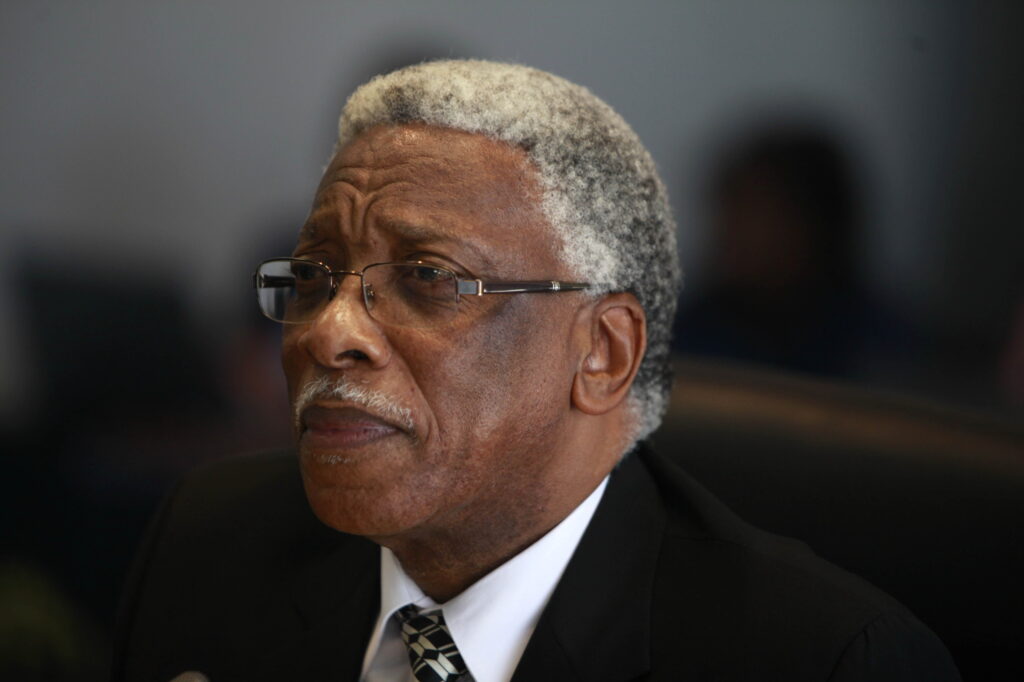
Judge Mbenenge
Judges Matter has consistently highlighted that power dynamics are central to this matter. Judge President Mbenenge is not only the Judge President of the Eastern Cape Division of the High Court, but also the second most senior Judge President and the sixth most senior judge in the country.
Judges Matter has conducted extensive research on sexual harassment in court buildings. Courts are not only made up of judges; they are workplaces employing secretaries, clerks, registrars, researchers, and support staff. Unlike ‘regular’ workplaces, the judiciary lacks a centralised HR structure to address misconduct effectively.
The Tribunal’s dismissal of expert evidence on power dynamics and its finding of ‘lesser and non-impeachable misconduct’ point to how hierarchical structures maintain power imbalances and discourage reporting. Its report also illustrated the significant burden placed on complainants in sexual harassment matters involving powerful leaders.
…Judge President Mbenenge’s “conduct is grossly inappropriate for a person holding the position of Judge (let alone a Judge President), especially in relation to a person in the position of the complainant.”
By contrast, the JSC’s findings were unequivocal: Judge President Mbenenge’s “conduct is grossly inappropriate for a person holding the position of Judge (let alone a Judge President), especially in relation to a person in the position of the complainant.” The JSC further noted that “his testimony before the Tribunal showed that he does not appreciate the responsibility associated with his position as Judge President and the power imbalance it creates.”
The JSC’s reasoning demonstrates that sexual harassment is not a personal failing but a governance failure, and reflects a genuine commitment by the judiciary to uphold constitutional values.
…sexual harassment is not a personal failing but a governance failure…
The introduction of the Sexual Harassment Policy for the Judiciary, with its core principles focused on power dynamics and trauma-centred approaches, is central to understanding that sexual harassment not only undermines the health and safety of the judicial workplace but also threatens the integrity of the legal system.
…sexual harassment not only undermines the health and safety of the judicial workplace but also threatens the integrity of the legal system.
However, the introduction of a policy will only be significant if it is implemented effectively. The JSC’s reasoning highlights the importance of applying the underlying principles of the policy, in practice, showing what ethical and accountable leadership looks like.
As custodians of the Constitution, leaders must commit to maintaining safe working environments where all employees are treated with respect and dignity. This requires a zero-tolerance approach, adequate regulatory oversight, and strong accountability mechanisms. The broader legal profession would benefit greatly from following this example.
Read the Judges Matter Media Statement on the matter.
Dimakatso Nchodu is Research and Advocacy Officer at Judges Matter, a transparency project of the Democratic Governance and Rights Unit at the University of Cape Town that monitors the South African judiciary.
No Comments